THE MACHINE GUN
WEAPONS OF WORLD WAR I
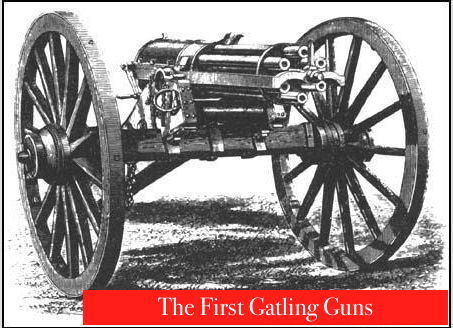
The Machine Gun in World War IThe machine gun was not a new weapon in World War I. In 1861 Richard Jordan Gatling, a dentist from North Carolina, produced an effective machine gun that he called the Gatling Gun. The Gatling Gun consisted of six barrels mounted in a revolving frame. The United States Army purchased these guns in 1865 and over the next few years most major armies in Europe purchased the gun.
In 1879 the Gardner Machine Gun was came out. It was an innovation on the Gatling Gun. The Gardner Machine Gun could fire 10,000 rounds in 27 minutes.
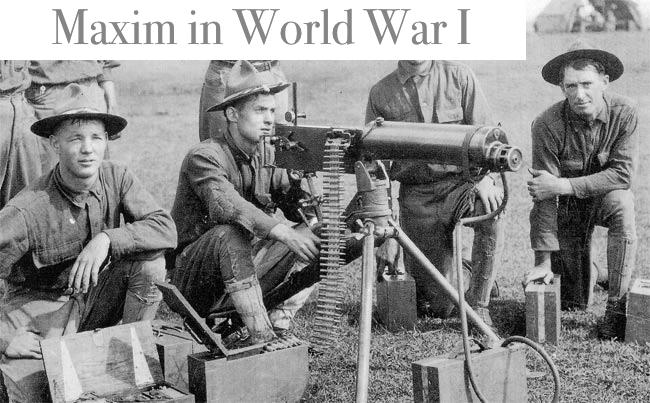
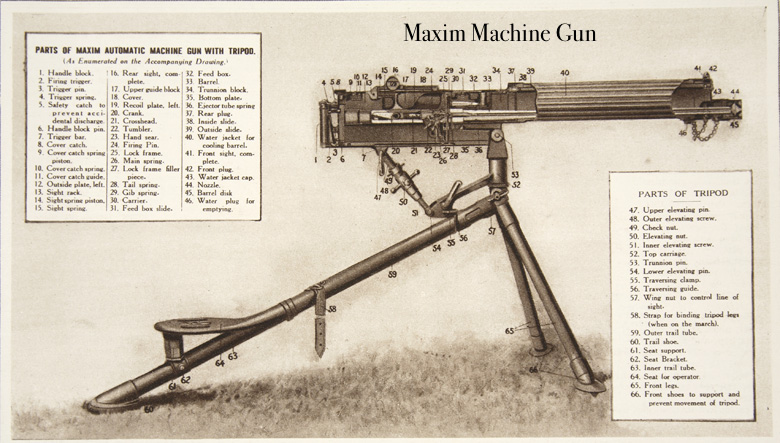
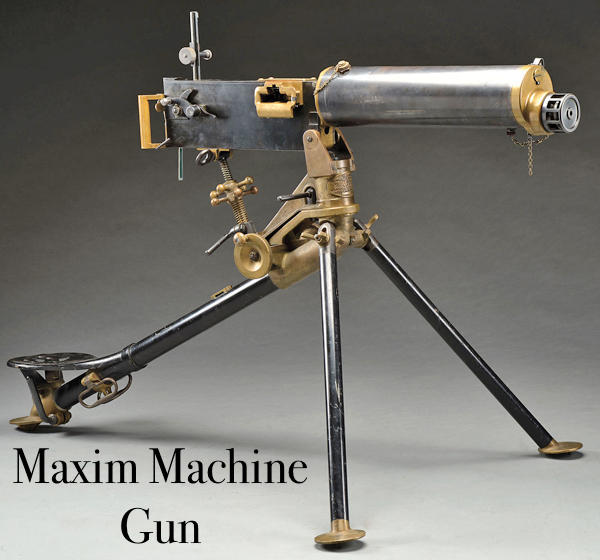
In 1884, an American named Hiram Maxim invented the Maxim Machine Gun. Maxim used the energy of each bullet's recoil force to eject the spent cartridge and insert the next bullet. The Maxim Machine-Gun would therefore fire until the entire belt of bullets was used up. Trials showed that the machine-gun could fire 500 rounds per minute and therefore had the firepower of about 100 rifles.
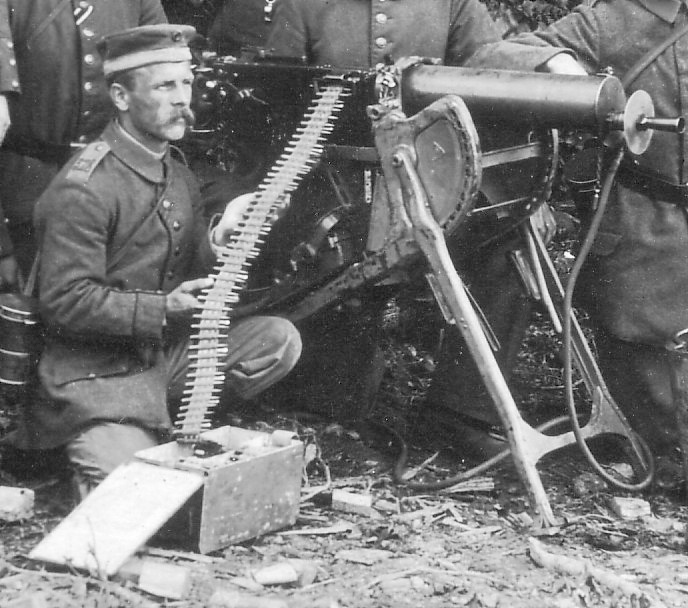
The success of the Maxim Machine-Gun inspired other inventors. The German Army's Maschinengewehr and the Russian Pulemyot Maxima were both based on Maxim's invention. John Moses Browning produced his first machine-gun in 1890. In 1895, the Browning Machine Gun was adopted by the US Navy.
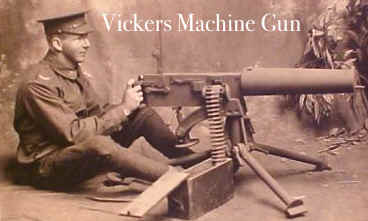
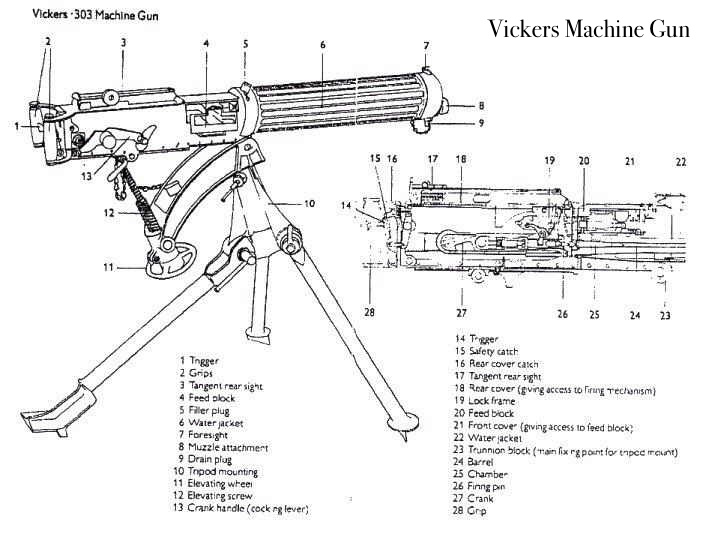
By the outbreak of the First World War, the British Army had adopted the Vickers Machine Gun. Fitted with interrupter gear, the Vickers was also standard issue on all British and French aircraft after 1916. During the war the British also used the Lewis Machine Gun. Easier to produce and far lighter than the Vickers, it was used by soldiers on the Western Front and on armored cars and aircraft.
|
Tool Box
Important Termsbarrels: the part of a gun that the bullets go through when the gun is fired
Browning Machine Gun: the machine gun created by John Moses Browning that was adopted by the U.S. Navy in 1895 Gatling Gun: the first effective machine gun invented by Richard Jordan Gatling in 1861 that consisted of six barrels mounted in a revolving frame Lewis Machine Gun: the machine gun invented after the Vickers Machine gun that was easier to produce and lighter than the Vickers machine gun: a gun that is able to shoot many bullets very quickly one after the other Maxim Machine Gun: a machine gun created by the American Hiram Maxim that used the energy of each bullet's recoil force to eject the spent cartridge and insert the next bullet and could fire 500 rounds per minute recoil: the snap back action of a gun after it is fired standard issue: the basic supplies given to everyone in the armed forces when they become a soldier Vickers Machine Gun: machine gun used on British and French aircraft after 1916 |
THE MACHINE GUN GALLERY
Click on each image to see the pictures of machine guns used in World War I and diagrams describing how they worked.